


IEM Comparisons
I compared the F1 Pros to similarly-priced IEMs on the Hiby R6 Pro II set to hi-gain in AB mode, with the F1 Pros requiring a volume of 24.
NiceHCK DB2 – 1xDD (USD $22)
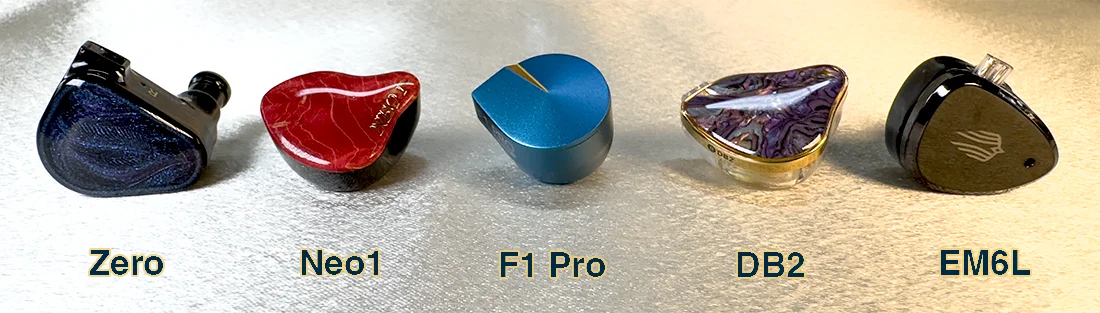
I’m busy working on a review of the DB2s, and ergonomically they’ve impressed with insanely light shells in a nicely sculpted form factor, though for some reason feel bigger in the ears than they look. Requiring only 17 volume on the R6P2 they’re extremely easy to drive.
It feels awkward being critical of an IEM worth just $22, so instead I’ll say this – if you’re thinking of buying a NiceHCK IEM… please do yourself a favour and just spend the $77 more on the F1 Pro instead.
The DB2’s DD-fuelled midrange tonality is a little more natural than the F1 Pro’s planar driver, but the F1 Pro’s are vastly higher in resolution, with a wider & deeper soundstage, much stronger & more impactful bass, feel far less-congested & can keep up with fast-paced music much better.
ISN Neo1 – 1xDD (USD $39)
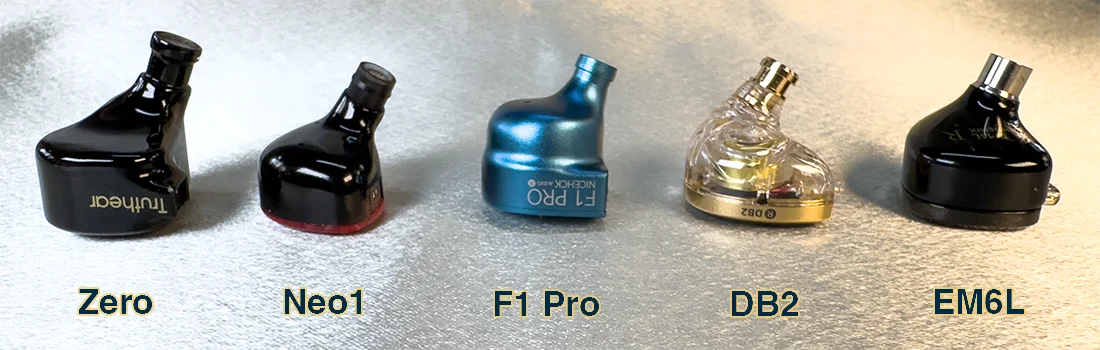
Another IEM I’ll be reviewing soon, the Neo1s are extremely light & well-sculpted to my ear geometry, as such they’re superbly comfortable. Even isolation is brilliant particularly given how light they are, making them a perfect for commuting. Needing just 19 volume on the R6P2 they’re easy to drive.
The Neo1s definitely have more midbass but a bit less sub bass, and with greater lower midrange output they sound much more tonally satisfying. However like the DB2’s their single-DD isn’t as fast as the F1 Pro’s planar driver, nor does it cover the entire frequency spectrum as effortlessly.
Neo1 resolution isn’t as high nor do they feel remotely as refined, with F1 Pro treble in particular being a big step up. By comparison the Neo1s come across as raw & slightly congested, they’re tuned to feel a little punchier with greater midbass output which definitely suits genres like Rock music, but the F1 Pros are performing at a higher technical level across the board.
Truthear Zero – 2xDD (USD $49)
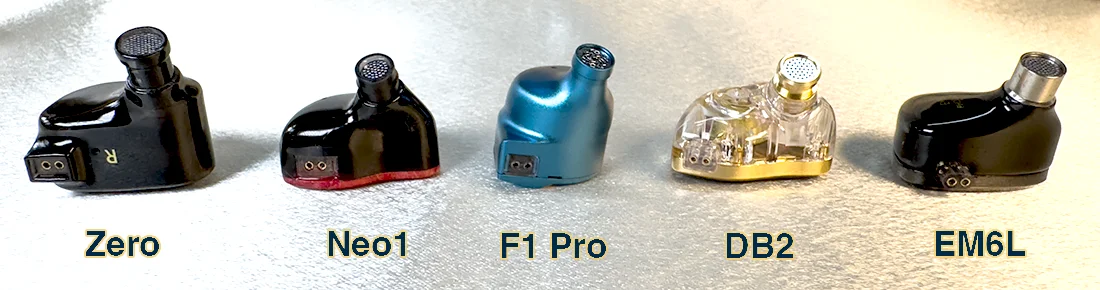
Despite being bulky the Zeros are very light, and fit far better than you’d think by looking at them. Isolation however is merely average as they don’t seem to seal off the ear canal quite as well as some of the more sculpted IEMs out there. Requiring 25 volume on the R6P2 they need a bit of power to drive.
The Zeroes sound more open simply because they don’t seal as well, so their soundstage has the illusion of greater width but is distractingly flat with no depth whatsoever. Note weight is also lower, dynamics are worse, bass is much less impactful and bass texture is very mushy.
Midrange tonality is slightly more appealing on the Zeros which is the one area they pull ahead of the F1 Pros, but treble is much lower in both quantity & quality and resolution is also far inferior.
Simgot EM6L – 4xBA 1xDD (USD $109)
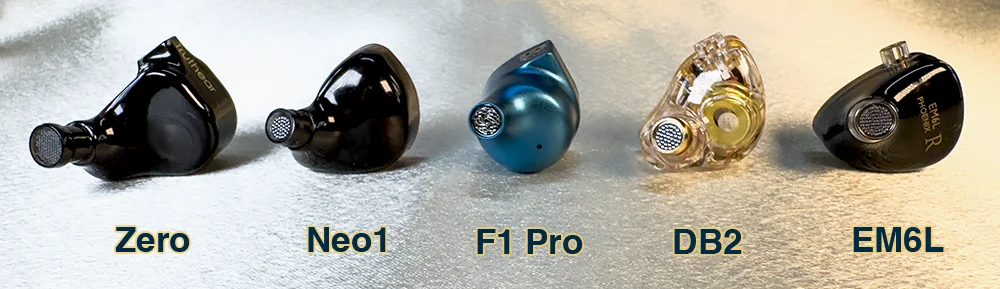
The EM6L shells are very heavy and I do notice this weight even during short listening sessions, however their shape is fairly comfortable & isolation is impressive thanks to all that mass. Requiring 24 volume on the R6P2 they require a bit of power to drive.
I can tell the EM6Ls are multi-driver hybrids as they allow instruments to remain distinct during complex passages even better than the F1 Pros, though they’re not quite as coherent. They have a smoother, less excited presentation but sound flatter and less dynamic. Nor does the EM6L midrange tonality impress me thanks to their Harman-target tuning, in fact I almost prefer the F1 Pros’ tonally.
Vocals are set further back on the EM6Ls and at times feel annoyingly distant, treble is a bit more prominent on the F1 Pros but treble quality feels similar between the two IEMs, though bass is definitely less impactful & lower in quantity on the EM6Ls and their soundstage is narrower.
Page 1 – Introduction, Packaging & Ergonomics
Page 2 – Sound Impressions & Technical Performance
Page 3 – IEM Comparisons
Page 4 – Cable Comparisons
Page 5 – Conclusion
Comments