


By Nick Smith, 27th February 2024
How much do you need to pay for good sound?
Depending on who you ask answers will vary, and the pace of technological improvement is making us revise our answers every year.
Five years ago a few hundred spent on earphones didn’t go far, and five years before that spending several hundred could land you IEMs that were objectively terrible.
Fast forward to the present – ISN offered to send me a pair of their new USD $39 ISN Neo1 IEMs in exchange for a review, and if you read me gushing over their Neo5s (my favourite 2023 IEM under $500) you won’t be surprised I jumped at the chance.
I’ve become a bit of a basshead lately -partly thanks to the Neo5s- and bass is ISN’s forte. So I expected they’d be bassy, and reading they sport a 10mm carbon nanotube DD suggested they could perform beyond the norm for IEMs in this bracket.
So how much performance can we expect under $50 from a single driver?
Packaging

The ISN Neo1s arrive in a very small cardboard box, inside is a fabric carry case which is well-shaped to occupy a pants pocket.
Inside are the earphones & stock cable, two sets of silicone eartips in three sizes, a shirt clip and three sets of acoustic filters I’ll discuss later.
The stock OFC silver-plated 2pin cable is unfortunately only available in a 3.5mm termination, and is as flimsy as you’d expect for an IEM in this price range – I’d be inclined to spend a few dollars replacing it with a higher quality quality 4.4mm cable. The entire package is fairly minimal, but for $39 it’s impressive they’ve included as many accessories as they have.
Ergonomics
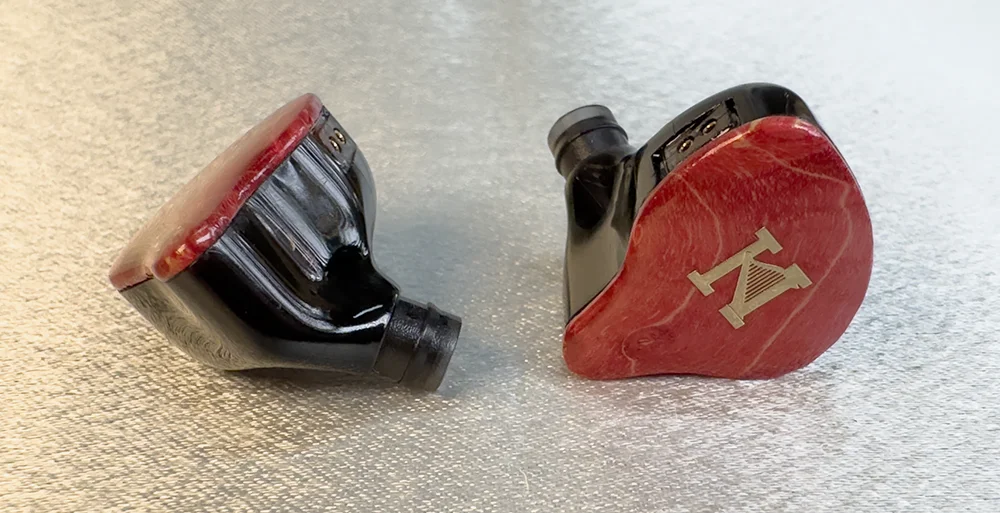
The Neo1s are ergonomically superb. For starters they weigh next to nothing, even compared to many budget hybrid IEMs they’re unbelievably light and the shells feel smooth against the skin. They’re also highly sculpted to match one’s ear geometry and feel right at home in mine.
Furthermore despite their weight they isolate far more impressively than expected from ultralight IEMs thanks to how effectively their shape blocks the ear canal, making them ideal for public transport use.
The stock cable isn’t going to win any awards for aesthetics or performance, but feels sturdy at the connectors where cables most commonly break. It’ll get the job done I suppose, but can easily be improved upon if you’re willing to spend a bit extra.
Page 1 – Introduction, Packaging & Ergonomics
Page 2 – Sound Impressions & Technical Performance
Page 3 – IEM Comparisons
Page 4 – Cable Comparisons
Page 5 – Conclusion
Comments