


IE600 vs A8000
By Nick Smith, 5th October 2022
This is an audio review twenty years in the making.
How the world of portable audio has changed in that time. I’ve watched it grow from humble Apple iPods and single BA-driver Shure earphones representing the pinnacle of portable fidelity, to a scarcely recognisable landscape where hybrid IEMs worth the price of used cars tower over a horizon dotted with digital audio players as sophisticated as they are weighty.
In many ways the earphones I’ll be comparing (both comprising single dynamic drivers & featuring minimalist aesthetics) are throwbacks to an earlier era as I am in some ways myself – unlike many of you I listen mostly to offline files and have a confessed preference for single-DD IEMs thanks to their unmatched timbral accuracy & coherency.
Can single-driver IEMs ever hope to compete with hybrids containing BA & EST drivers on technical grounds, and do their strengths outweigh their shortcomings? These are compelling questions but you won’t find them answered here. Instead I’ll merely state if top-tier technicalities are a requirement of your next IEM purchase then neither of these earphones may suit you as their strengths lie elsewhere.
Enough preamble, I’d best make a start.
Two months ago I found myself at Addicted to Audio in Melbourne with a pair of Andromeda 2020’s in my pocket that had impressed but never fully satisfied. On the counter sat a triplet of alternatives– the IE600s, IE900s and A8000s.
To my surprise the IE900s left me cold. Immediately apparent was their stereotypically sucked-out Sennheiser midrange that rendered instruments with unnatural hollowness, a trait I felt even their impressive sub bass & broad soundstage couldn’t excuse.
The IE600s by contrast seemed far better balanced, indeed their standout quality was that nothing stood out as wrong. The A8000s I immediately recognised as bright and lively, with a character reminiscent of the Dunu Lunas.
I walked out after purchasing the IE600s. They felt the safest choice, indeed “the safest choice” might well be an appropriate epitaph for their tombstone. Yet though they satisfied admirably in the weeks that followed, my mind kept returning to the sound of the A8000s. So despite being content I did what any self-respecting Head-Fier would do – buckled under the weight of my own excessive cravings and purchased a pair.
Was it a mistake or was the decision justified? Read on, and we may both learn the answer.
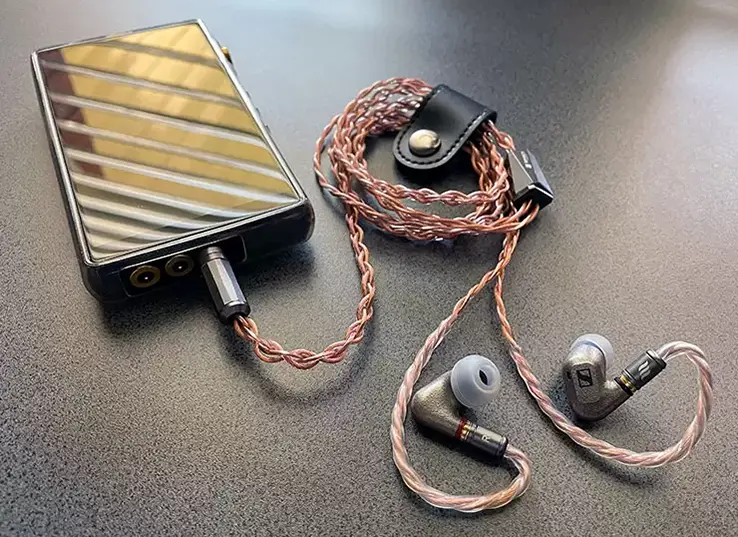
Sennheiser IE600
The Sennheiser IE600s are quite possibly the easiest IEMs in the world to recommend to anyone willing to spend USD $700 on earphones.
They do virtually nothing wrong and a great many things right. To begin with they’re very well made and feel remarkably durable. Others have said their Zirconium shells feel more pleasant to the touch than those of the IE900s, and I agree. Their form factor is vanishingly small and as a result it’s quite easy to forget you’re wearing them. Their recessed MMCX connectors are a problem (not all aftermarket MMCX cables fit) but Effect Audio’s CONX connectors play nicely with them which is some consolation.
Sonically the IE600s are magnificent all-rounders which perform well with every genre of music. None of the three major frequency bands stand out as manifestly inadequate in proportion to the other two, though other more ‘specialist’ IEMs can deliver vastly higher amounts of bass, midrange or treble by comparison. What those give up is the even-handedness of the IE600s in which balance between frequencies is always tastefully maintained.
Indeed the IE600’s major strength can also be considered their primary weakness. That sonic balance & corresponding restraint preventing nasty frequency spikes from jutting through the clouds can leave the sky bare of contrast. Which is not to say the IE600’s lack dynamics, rather there is a slight flatness of presentation leaning towards politeness. Not enough to cruel musical enjoyment for the overwhelming majority of albums, but a tendency nonetheless.
With regards to technicalities the IE600s occupy a rung towards the higher end of the single-driver DD spectrum but not at the very top. Their soundstage, though not as broad as the IE900’s, is fairly wide though disappointingly flat. Dynamically they’re quite strong, and imaging is decent. Resolution is above average by single-driver standards but appreciably below TOTL hybrids, but in compensation their coherency is superb and their timbre very good, but perhaps lagging slightly behind warmer single-driver IEMs with weaker technicalities. Rarely does one listen to the IE600s and feel resolution is lacking, as any absence is more easily noticed through direct comparison to more highly-resolving IEMs.
The IE600s are difficult to fault, and are only rendered inadequate in comparison to TOTL hybrids which lack their coherency (to say nothing of being physically larger) or specialist IEMs which may do one particular thing better but others worse.
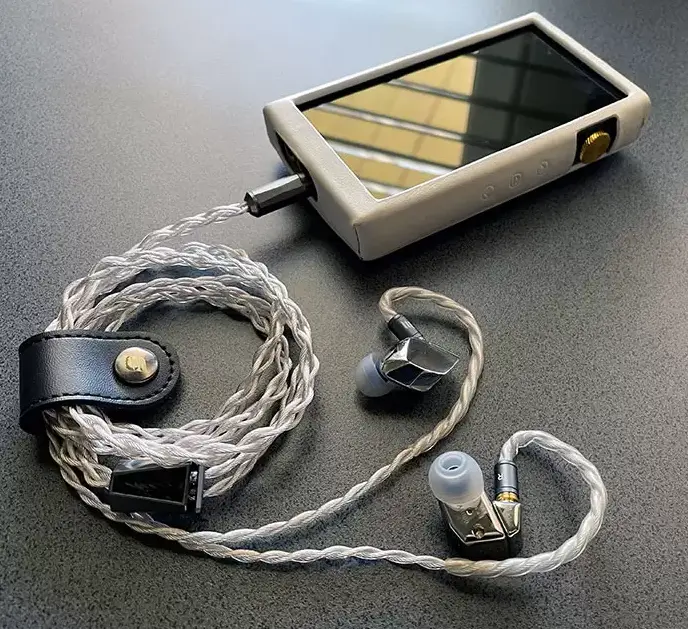
Final Audio A8000
If my description of the IE600s gave you a “solid, but not spectacular” vibe, the USD $2000 A8000s may be described as more spectacular but a less solid choice.
Significantly heavier & larger than the IE600s, the greater bulk of their stainless steel shells provides improved isolation and a more secure seal in my case, though they do not “disappear” when worn quite as readily.
The A8000s are famous for their pure beryllium foil drivers. Having owned the Dunu Lunas I knew what to expect – responsiveness substantially faster than other DD drivers on the market, which greatly aids dynamics and the ability to maintain control during complex passages of music, but may also lead to aggressiveness as the attack on the leading edges of notes becomes more pronounced.
This advantage leads to the A8000s being significantly more technically capable than the IE600s. Curiously the Sennheisers have a slightly wider soundstage, though the A8000’s is markedly taller and deeper. However in resolution & dynamics Final’s flagship pulls comfortably ahead, performing spectacularly in both areas above all other single-DD IEMs I’ve tested.
So much for the good. The ‘bad’ is although Final labels the A8000s as all-rounders eminently capable with any genre, their tuning is liable to polarise opinion and compromise their ability to reproduce all genres satisfactorily.
Compared with the IE600s which are extremely balanced across major frequencies, the A8000s feature deeper & more pronounced sub bass but substantially less midbass. Their lower midrange is less prominent resulting in less warmth added to the presentation, but the upper midrange & lower treble are boosted significantly. The net effect is the A8000s have what might be labelled a traditional reference sound signature, with an upper midrange & lower treble emphasis. It is a flavour suiting some genres better than others.
IE600 vs A8000
Broadly, the IE600s feel like an extremely well-tuned jack of all trades that tread a delicate line between greater technical proficiency on the one hand, and greater musicality on the other. They excel at getting out of the music’s way without calling excessive attention to themselves, yet deliver enough detail & dynamics across a wide enough stage that you aren’t left feeling anything essential to the performance is missing in the way you might with cheaper single-DD IEMs that lack technical chops.
The A8000s are a different beast entirely – far less well-rounded and accepting of compromise. Instead they have a voice of their own, yet it is their colourlessness which colours their performance. Music on the A8000s feels stunningly clear, precise and correct, down to the smallest detail. Meanwhile their tremendous dynamics and prodigious sub bass prevent the feeling of flatness or lack of gravitas sometimes accompanying reference-tuned transducers.
Unfortunately this laser-like precision is extremely unforgiving of poor recordings. To make matters worse the A8000’s presentation is extremely upfront, seating you directly on stage next to the performers (RIGHT NEXT TO THEM) as opposed to the IE600 positioning the listener a more ‘sensible’ five or six rows back. IE600 notes are also more rounded, and the presentation correspondingly gentler.
Vocals on the A8000 for instance, both male and female, will leave you hearing every miniscule nuance in the singer’s throat, and the images produced by individual voices & instruments feel noticeably larger than those of the IE600. The A8000’s remarkable speed also means instruments retain detail & remain distinct even when many are playing, whereas the IE600 becomes overwhelmed by complex passages far more commonly.
One disadvantage of the A8000’s tuning is they often perform poorly on rock & rock-based pop music. Where the IE600s will pleasingly smear notes together to create a sense of groove & rhythm, the A8000’s absolute insistence that every note from every instrument MUST be distinct (even those comfortably residing in the background on other IEMs) can be fatiguing, and lead to such albums sounding clinical.
With classical music or movie soundtracks the tables are turned, and the sheer precision of the A8000 becomes a wondrous joy to behold. Symphonic works are especially good, as the thundering sub bass, superb dynamics, and breathtaking delicacy with which string instruments are portrayed elevates performances to levels I greatly doubt any other single-DD IEM can match, or perhaps any IEM in the world at all.
Electronic music is more of a mixed bag in the hands of the A8000s. Superb sub bass, dynamics and detail can lead to breathtaking performances, but the upfront and aggressive upper midrange can accentuate even the minutest harshness present in recordings. As a low-volume listener I solve this by simply backing off below my usual level, but anyone accustomed to dangerous decibels may experience a ringing effect impossible to ignore.
However regardless of genre there are key differences in the presentations of both earphones.
The IE600, though not what I’d call laidback per se, are far more sedate. With warmer air between fuzzier notes stretched across a wider stage, they’re fairly non-fatiguing and easy to tune-out to when working whilst listening, yet engaging enough to convey the gestalt & emotional tone of a performance.
Whereas the A8000s invariably compel attention, delivering everything all at once in a manner that excites and occasionally overwhelms, bringing music to life with unrelenting, unwavering energy.
Selected Comparisons
The following tracks were compared with both IEMs many times. My favourite Azla Sednafit tips were used, source was an iBasso DX240 with AMP1MK3 amp card, and all tracks were played locally through Mango OS via a 512GB Micron WT micro SD card. Cable was an MMCX Effect Audio Ares S. I also tried an EA Cadmus but greatly preferred the warmer copper timbre of the Ares S with both IEMs.
Comparison #1 • Van Morrison – Crazy Love 24/192
The acoustic nature of this track suits the A8000 very well. They render guitar plucks with supreme delicacy, contrasted with the bassline which is firm and deep, while Van Morrison whispers with an ethereal crispness.
Moving to the IE600s, the performance feels a half-step slower and more relaxed. More space surrounds Van Morrison’s voice which is projected slightly louder & more distinctly from the surrounding instruments, spotlighting him as the star of the show whereas on the A8000 everything onstage jostles for attention.
Comparison #2 • Anne-Sophie Mutter & John Williams – Marion’s Theme 24/96
This gorgeous song from Raiders of the Lost Ark is brought to life through Anne-Sophie’s dominating violin. On the A8000s I am riveted by her performance, spellbound by the eloquence of her playing… every subtle nuance of which is rendered devotedly, which remains distinct from the rest of the orchestra at all times.
On the IE600s her violin blends in with the surrounding instruments much more, and I find myself more easily swept up in the great swells of the orchestra, as the general thrust of the performance carries me along at the expense of marvelling at her singular virtuosity.

Comparison #3 • Yello – Drive/Driven 24/48
My favourite Yello track from their 24bit 40 Years compilation, Characterised by romantic longing in the eternal vastness of space. The IE600’s wider stage lends the performance a cavernousness filled with warmer, smoother notes that help project an enigmatic nostalgia.
On the A8000s everything is sharper and more resolved, stifling the rhythm as details which should be tastefully relegated to the background grab excessive prominence. Bass may be deeper & tighter, but the guitar is rendered with such bite it becomes quite distracting.
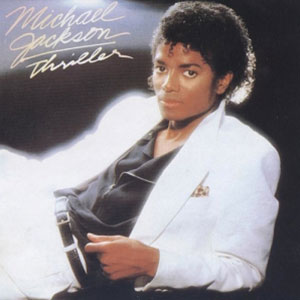
Comparison #4 • Michael Jackson – Billie Jean DSD64
Always a great test track, the DSD version is especially good. The IE600’s flatter, wider soundstage presents a slower, more subdued bassline with less upper midrange & treble sparkle, allowing Michael’s voice to be rendered in a pleasantly well-rounded fashion.
Switching to the A8000s yields a more exciting V-shaped presentation in which the nuances of each instrument are accentuated, including the maracas which recede into the background on the IE600s. Michael’s voice verges closer to sibilance on the A8000s, but with that comes a greater articulation & distinction from the surrounding notes.
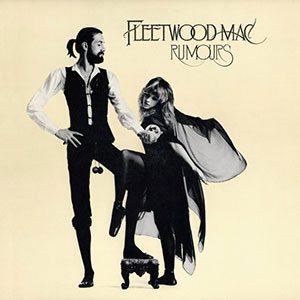
Comparison #5 • Fleetwood Mac – You Make Loving Fun 24/96
A great recording from a classic album, the pulsating bassline dominates the A8000’s rendition in which shimmering cymbals and piercing guitars clamour for attention, compelling me to actively listen to every measure.
The IE600s take several steps back from the stage, offering a more laid-back rendition in which notes are more rounded and blend together harmoniously, encouraging me to relax and let the groove wash over.
Conclusion
Great art challenges our assumptions and asks questions of us, so I ask this – what makes an earphone great?
Is it the uniformity with which it capably reproduces music of all varieties, or do we only measure the peaks and ignore the troughs?
Clearly these two IEMs were born of different goals, the one to illuminate equally and the other to shine brightest and cast deep shadows. The IE600 will satisfy a vastly larger audience, whilst the A8000 selectively radiates more powerfully.
Having resolved at the beginning of 2022 to become a serious classical listener, I’ve found the A8000s a worthy investment. Yet few earphones could highlight their shortcomings as all-round performers as the IE600s have… in the end does it matter? Perhaps if budgetary constraints or a commitment to minimalism confined me to a single choice it might, but as matters stand perhaps not.
Twenty years ago it was normal to expect a single set of earphones to do everything, because our expectations of what they could do were substantially lower. Now manufacturers produce models with wildly different flavours, abandoning the precept that a single IEM must be equally at home in the concert hall or mosh pit as it is on the dancefloor.
The A8000s are special. The IE600s are safer.
Comments