

IEM Comparisons

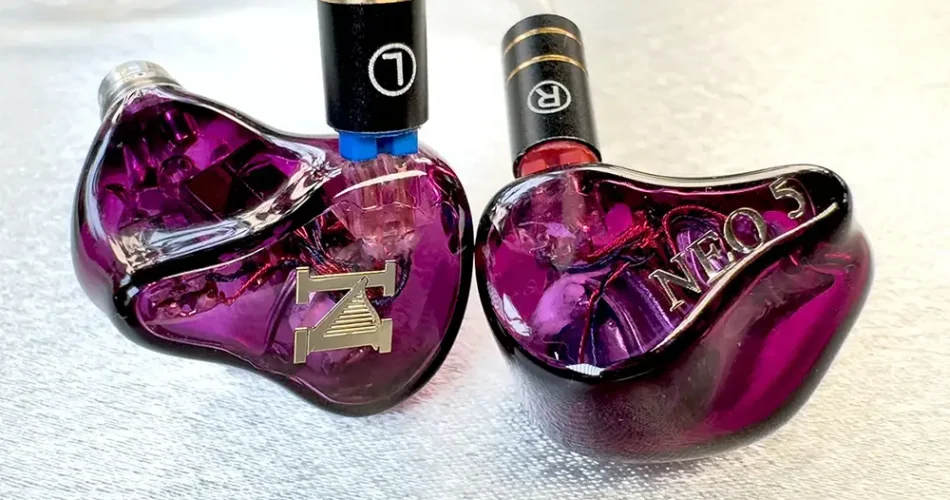
So how do the Neo5s stack up against the competition? I compared them with several IEMs on hand… and then even more at Addicted to Audio! All comparisons were made using the Astell & Kern SR35 I recently reviewed, set to Hi-Gain mode with the Neo5s requiring a volume level of 40.
Penon Globe – 2xBA, 1xDD (USD $329)

Physically the Globes are slightly larger & stick out a bit further. I find the Neo5s slightly more comfortable but the Globes are still exceptionally good. Requiring a volume of 38 on the SR35 (vs 40 for the Neo5s) the Globes are similarly easy to drive.
Immediately noticeable is the Globes possessing MUCH lower bass quantity, and bass texture isn’t as satisfying either. I’d describe the Globes’ bass as merely adequate, whereas the Neo5s emphasise bass enormously. On the other hand the Globes have a blacker background with slightly improved imaging, and a slightly deeper soundstage though it is definitely narrower than the Neo5s’.
Coherency is a great strength of the Globes and they edge the Neo5s in this regard. Tonally the Globes don’t feel as dynamic or energetic, instead coming across as smoother with a midrange that feels more emphasised with extra presence and more warmth. The Neo5s have a slight edge in resolution but the difference is slight.
ISN EST50 – 2xBA, 1xDD, 2xEST (USD $449)

Physically larger but similarly sculpted to one’s ear geometry, the EST50s’ comfort lags slightly behind the Neo5s but their extra bulk helps them isolate a bit more effectively. Requiring a volume of 40 on the SR35 they’re just as easy to drive.
Both IEMs clearly share the same DNA with the EST50s delivering similarly elevated levels of bass, and though bass quantity is slightly higher on the Neo5s, I do prefer the EST50s’ bass texture. The EST50s are more V-shaped as opposed to the Neo5s’ L-shape, so as you’d expect they’re appreciably brighter.
Thanks to their EST drivers the EST50s’ treble is also silkier & more resolving, helping them feel more refined and less raw. The EST50s’ soundstage is also wider, with better imaging & separation, and note weight also feels superior.
Which may point to the EST50s being a straight upgrade to the Neo5s, and in many respects they are, but things aren’t quite so simple. Indeed I do think the EST50s offer a superior implementation of their respective tuning, but I prefer the Neo5s’ tuning more. Listening to the EST50s however does make me wish the Neo5s had a couple of EST drivers.
Unique Melody Mest MKIII – 4xBA, 1xDD, 1xBCD (USD $2359)

Mest MKIII occupy a completely different price category, but since I’m participating in the Australian tour organised by Damz87 the chance to compare them has presented itself. The MKIII shells are large & stick out quite a lot, and although comfort is reasonable, for multi-hour listening sessions I’d prefer something slightly smaller. The MKIII stock cable is also one of the least ergonomic I’ve encountered, being incredibly stiff & inflexible. Requiring 48 on the SR35 they benefit from a decent amount of power.
Mest MKIII feel like an even more refined EST50, with a similarly bright V-shaped signature. Bass has terrific texture but substantially lower quantity than the Neo5s’, yet is north of neutral enough to feel satisfying. The midrange is MKIII’s biggest weakness, being fairly recessed & distant and lacking in lower midrange richness. I’d be reluctant to purchase MEST MKIII on these grounds given a forward midrange with lots of presence is something I value highly.
MEST MKIII’s EST-fueled treble is terrific, and is much more prominent than that of the darker Neo5s. Even more impressive are MKIII’s technicalities thanks to its’ trump card – the bone conduction driver. Being able to localise individual instruments in space so effortlessly & precisely is unquestionably MKIII’s standout attribute, aided by terrific soundstage depth & background blackness.
Tonally MEST MKIII lies on the cooler side of the spectrum and its’ presentation can feel very “hi-fi” at times, with a lack of warm earthiness hindering its’ ability to portray instruments in a believable fashion. This is where I prefer the Neo5 tuning, though the former is unquestionably playing in a different league when it comes to technical performance.
Page 1 – Introduction, Packaging & Ergonomics
Page 2 – Sound Impressions & Technical Performance
Page 3 – IEM Comparisons
Page 4 – More IEM Comparisons
Page 5 – Cable Comparisons
Page 6 – Conclusion
Comments