


Sound Impressions
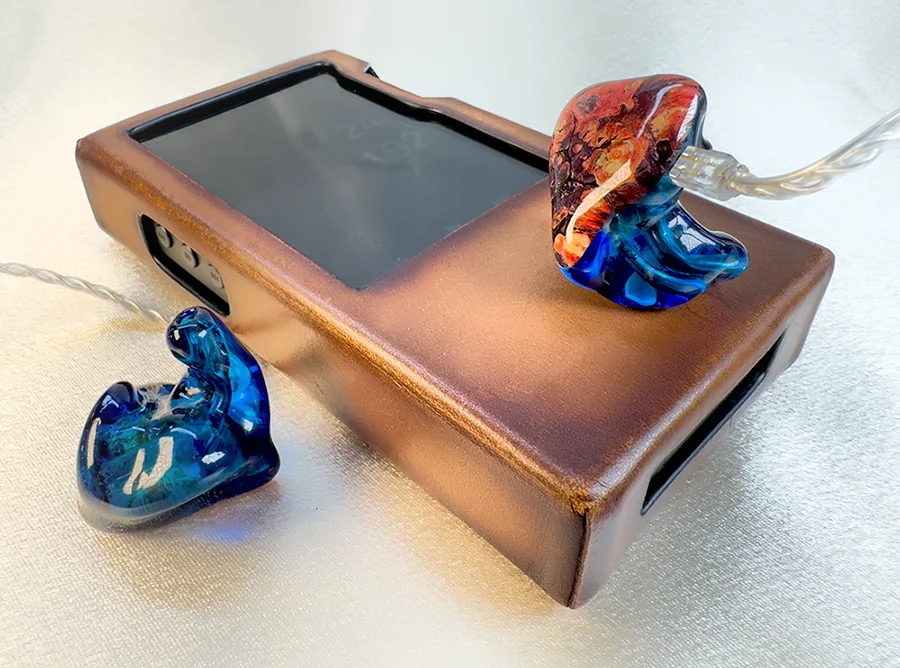
I used a Luxury & Precision P6 Pro set to hi-gain mode at 5/60 volume to evaluate the Model2s, since I’m a low volume listener. Here you can find the Tidal playlist I use to evaluate IEMs.
The Model2s are 2xBA CIEMs that deliver one of the most dynamic & resolving midrange experiences of any earphone ever made. Nothing else sounds quite like them, but bass & treble play supporting roles.
Bass
Bass is without question the Model2s’ weakest element, going against the recent trend towards bass-dominant IEMs. This is a consequence of their 2BA driver configuration, with bass being the most obvious price paid for the distinct benefits gained from their unique approach.
By BA-bass standards the Model2s deliver bass quality on par with many of their competitors, with bass texture being quite impactful & satisfying even with genres like EDM where bass can be critical. However bass quantity has been deliberately tuned to be quite neutral, so bassheads will be left wanting more.
BA bass itself is an interesting thing – I find it tends to be quite track dependent in how effectively it mimicks the rumble of a good dynamic driver, whereas DD bass is often more gratifying regardless of the instruments or style of bass being reproduced.
The silver lining is by omitting a DD the Model2s are extremely responsive, having no issues whatsoever keeping up with the fastest music you can throw at them.
Midrange
First a warning – the Model2s will make vocals on your other IEMs sound disappointingly inferior.
You’ve probably heard midrange centric IEMs before, they’re often warm & syrupy to make voices seem romantic. These aren’t like that. The Model2 midrange is hyper resolving, without being clinical.
Every tiny midrange nuance you’ve never heard before will be right there in front of you, bringing every guitar pluck & vocal inflection and their attendant harmonics to the fore with sheer effortlessness.
There’s quite a bit of upper midrange present, though I find the balance between upper & lower midrange close to perfect. Articulation is emphasised over warmth, and you’ll find vocals are quite forward so they’ll rivet your attention. The Model2s are not shouty, but I’d be hesitant to pair them with a cable that emphasises the upper midrange further.
Its a unique midrange experience – unique because with only 2 BAs present there’s a combination of cohesiveness, speed, directness & sheer transparency other IEMs can’t capture in quite the same way.
Treble
Treble on the Model2s feels slightly recessed, being very tightly integrated with midrange but rarely stealing attention away from it. Upper treble sparkle in particular is toned down so as not to feel detached from the rest of the presentation.
I wouldn’t put the Model2s treble on par with the best EST driver treble I’ve heard, there isn’t the same silkiness & endless extension. As such, I’d choose IEMs with EST treble for Classical, Soundtracks or any genre where treble deserves prominence over the midrange, when reproducing violins for instance.
Model2 treble is very solid by BA standards, without necessarily standing out as special. I’m reminded of the approach taken by the Oriolus Traillii & Penon Impact, where treble has been deliberately dialled down slightly to avoid robbing the midrange of too much attention.
A benefit here is how well-suited such tunings are for longer fatigue-free listening, which often contributes greatly to an IEM’s usefulness in one’s collection. I’ve also wondered if Traillii and the Model2s being sealed without venting may be a contributing factor to what makes them sound special.
Technical Performance
Befitting the Model2s unique driver configuration, their technical performance is somewhat unusual.
With just 2 drivers, it’s no surprise the Model2s are shockingly coherent. They come very close to delivering the unmatched coherency of a single-DD, which is why single-DDs continue to be so loved.
Yet this is a different sort of coherency.. with single-DDs it’s often marred by their lack of speed, whereas the Model2s are blisteringly fast. They’re also extremely dynamic, with very good note weight as well.
This combination of speed & coherency translates to a holographic presentation to some extent, facilitated by their exceptionally deep soundstage where instruments are layered distinctly.
Yet although imaging is very solid I wouldn’t call it exceptional, and suspect the Model2s require more drivers & perhaps extra treble extension to really nail that attribute. Though very deep, it must also be said their stage is narrower than many similarly priced IEMs, being merely average in that regard.
The low driver count also causes the Model2s to inherit a single-DD IEM weakness, which is the struggle to separate instruments as cleanly as earphones with higher driver counts.
The Model2s outperform single-DDs in separation, yet still lag slightly behind costly hybrids when separating many instruments during busy passages. Yet I rarely notice it with complex electronic music, only after swapping to an IEM with more BAs does the shortcoming become apparent.
Page 1 – Introduction & Packaging
Page 2 – Ergonomics & Appearance
Page 3 – Sound Impressions & Technical Performance
Page 4 – IEM Comparisons
Page 5 – Cable Comparisons
Page 6 – Conclusion
Comments