


Talking Point: Cable Performance vs Ergonomics
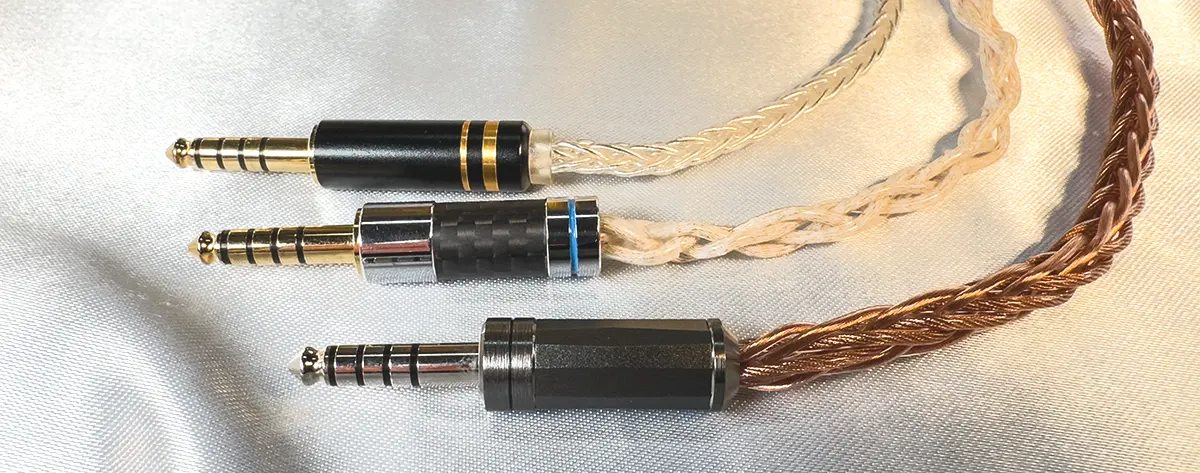
When you’re looking for a cable to max out your IEM’s performance the biggest cost may be in comfort rather than price.
This shootout has made it clear by jumping from a 4 to an 8 wire cable you’ll typically hear performance gains in a few areas, and although the difference in price between say an Ares S 4 wire & 8 wire is ‘only’ $100, you’ll notice the extra weight & thickness each time you use it… long after the price is forgotten.
So I think a natural question to arise is can you get 8 wire performance from a 4 wire cable? Well sort of, but not really.
If you want top tier dynamics, bass & soundstage expansion I do think there are no shortcuts – more wire generally means performance gains in all those areas, and there’s a greater potential for total conductor material in 8 wires rather than 4.
Yes, you could purchase a 4 wire cable which uses extremely large gauge wire (or even 2 wires in the case of Gray Dragon) however then you’re merely purchasing a similar amount of copper or silver divided into a smaller number of wires – which probably makes ergonomics worse since a greater number of smaller gauge wires is usually more flexible than the reverse.
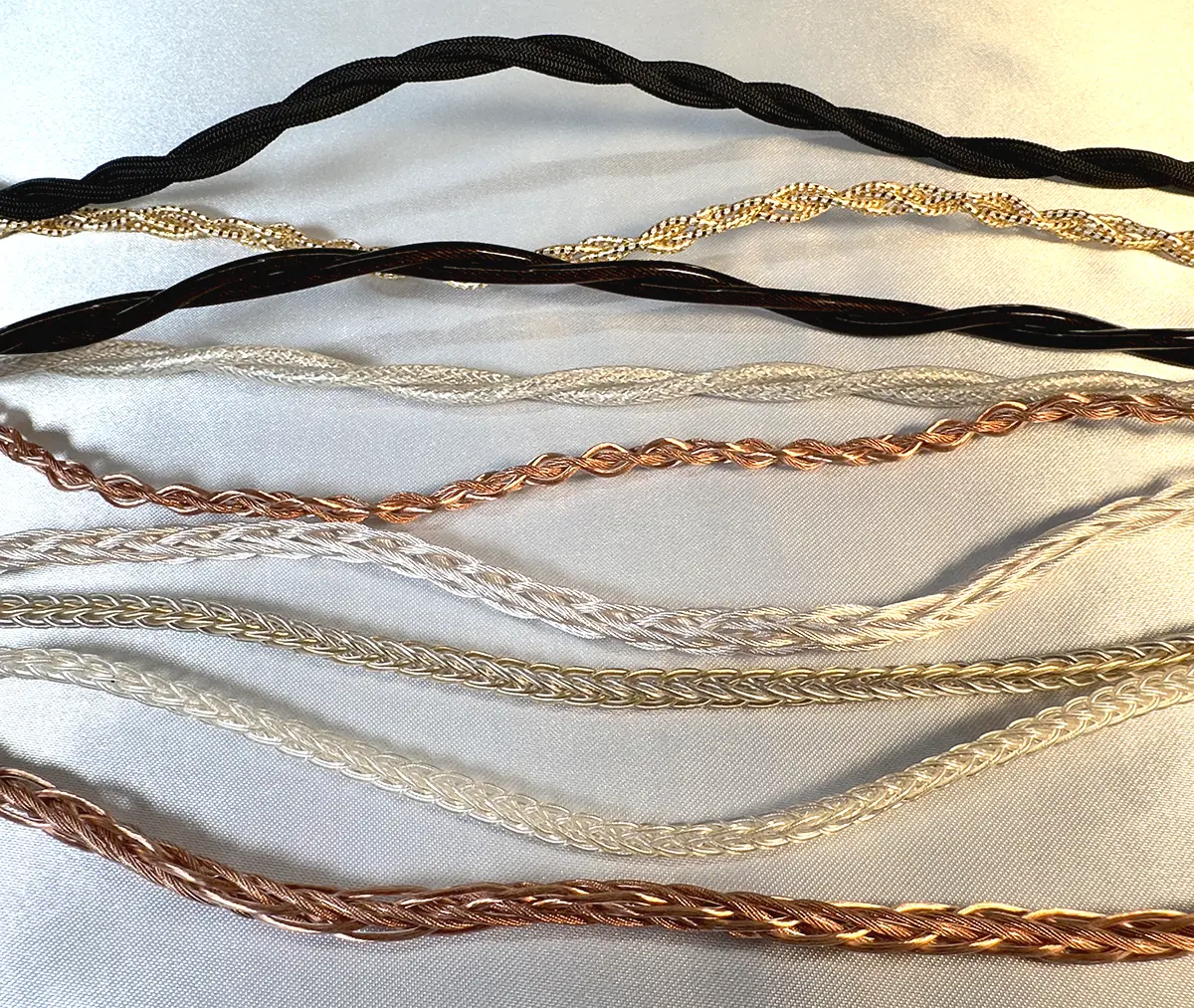
So what we’re really talking about is the amount of conductor material in your cable regardless of how many wires it uses – does that need to be maximised to obtain ultimate performance?
Yes, I think it does. Bigger, heavier cables generally create a larger soundstage for instance. There are expensive 4 wire cables with fancy geometry (containing a very high number of individual strands in each wire) like Sky-Sea Voice that deliver spectacular performance, but adding 4 more of the same wires to those cables will inevitably broaden the stage even further.
The question is whether you feel substantially worsening ergonomics by adding more weight & stiffness is worth gaining noticeable, but relatively minor improvements in the grand scheme of things. Perhaps the only way to know is by demoing or purchasing a few 8 wire cables yourself to see what sort of ergonomics you’re happy to live with.
Shielding
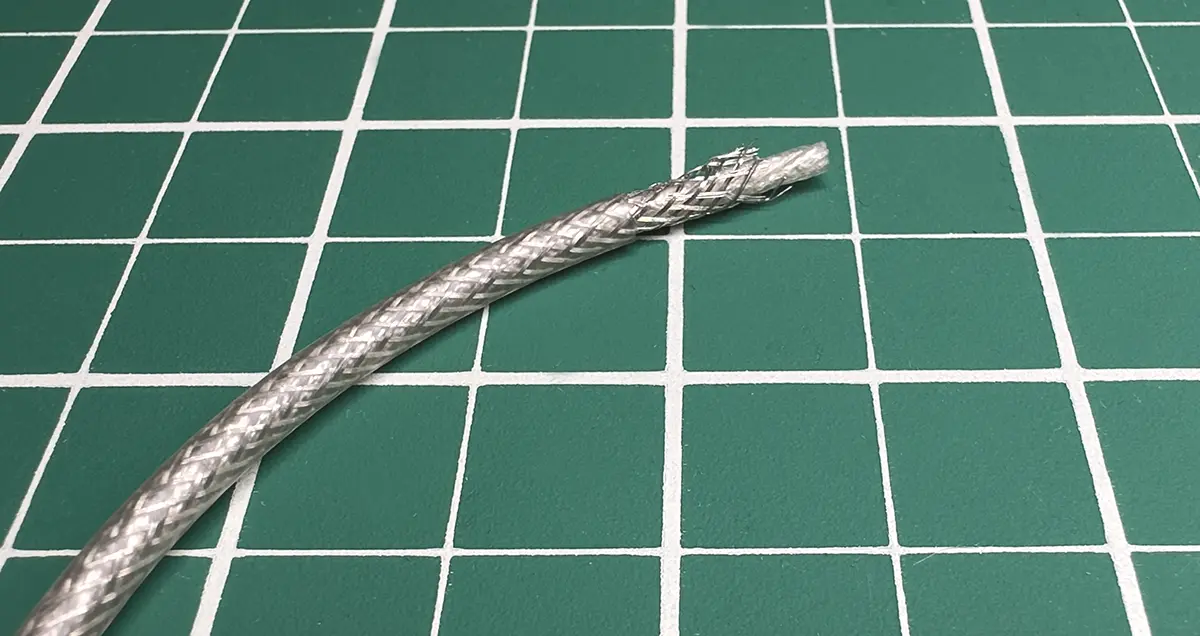
This is another interesting aspect of cable construction. Cables like Cardas Clear & Gray Dragon use coaxial shielded wire that contains an outer layer of copper or silver, to shield the inner signal-carrying wires from RFI & EMI. At least that’s the theory.
This is a slightly controversial topic in the industry given some manufacturers do not believe shielding is appropriate for IEM cables – with a cited reason being there is no ground connection at the earphone end, so shielding can only be grounded at the plug, if the maker chooses to ground it at all.
Effect Audio, one of the biggest names in earphone cables, do not to my knowledge use shielding in any of their IEM cables. Whereas PW Audio have become known for offering both shielded & unshielded versions of their popular models.
Without diving too deeply into the theory, many manufacturers believe grounding shielded cables only at one end effectively causes them to act as antennas, completely defeating the purpose of shielding the signal from interference, which the cable ironically becomes more susceptible to.
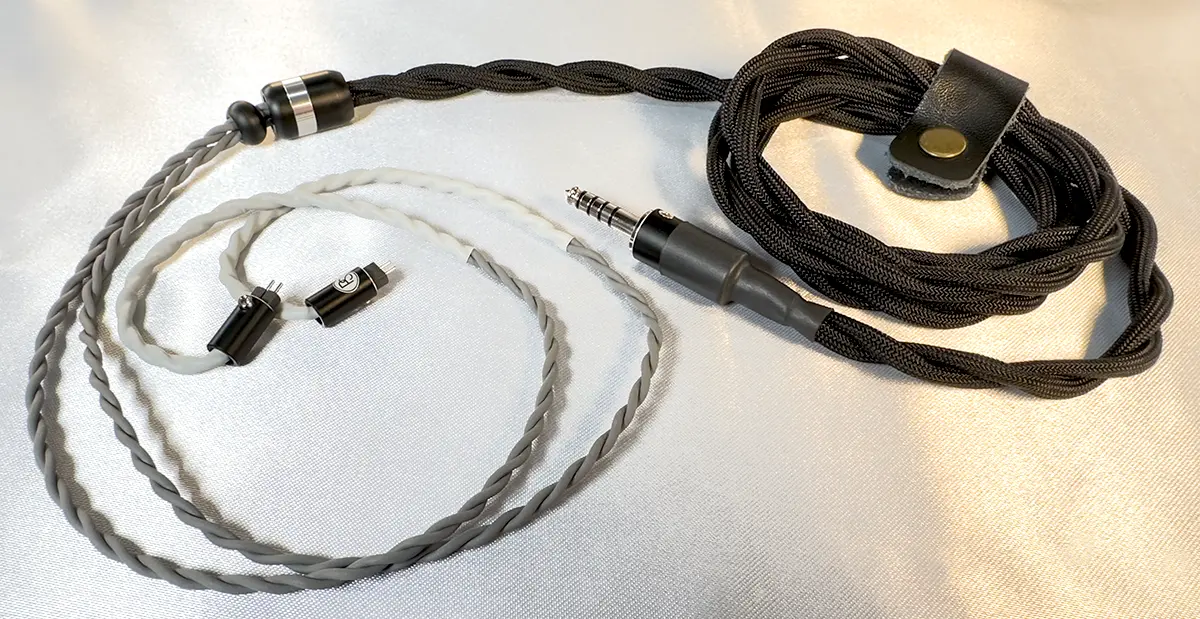
Interestingly my own experiences with shielded IEM cables have led me to feel shielding actually does offer some sonic benefits, but those benefits are generally not as easy to perceive as say doubling the amount of conductor material in a particular cable would be.
I typically hear shielded cables as having a blacker background with slightly improved perceived resolution and sharper imaging – individual notes can feel like there is more empty space around them.
The downside of shielding is it generally makes a cable significantly less flexible, along with adding extra weight (due to the shielding layer/s) which is weight that could otherwise be used to add more signal-carrying conductor material instead.
So philosophical battle lines have essentially been drawn by manufacturers, some of whom believe shielding is a waste of time and others (like Brise Audio) who seem to swear by it. Meanwhile shielded PW Audio cables are typically regarded as better-sounding by their owners than the equivalent non-shielded versions.
I encourage you to demo both shielded & unshielded cables to see what you think. In audio it’s always best to let your ears decide.
Introduction
Cable 1 & 2 – EA Ares S 4 Wire & 8 Wire
Cable 3 – Effect Audio Cadmus 8 Wire
Cable 4 – Effect Audio Code 23
Cable 5 – ISN S8
Cable 6 – Liquid Links Martini
Cable 7 – Liquid Links Venom
Cable 8 – NiceHCK BlackSoul
Cable 9 – Penon CS819
Cable 10 – Penon Leo Plus
Cable 11 – Penon Obsidian
Cable 12 – Penon Vocal
Cable 13 – DIY Cardas Clear
Cable 14 – DIY Hakugei Gray Dragon
Cable 15 – DIY Hakugei Sky-Sea Voice
Talking Point – Cable Performance vs Ergonomics
Talking Point – Cable Value
Talking Point – Cable DIY
Cable Awards
Conclusion
Cable Manufacturer Links & Acknowledgements
Comments