


Talking Point: Cable Value
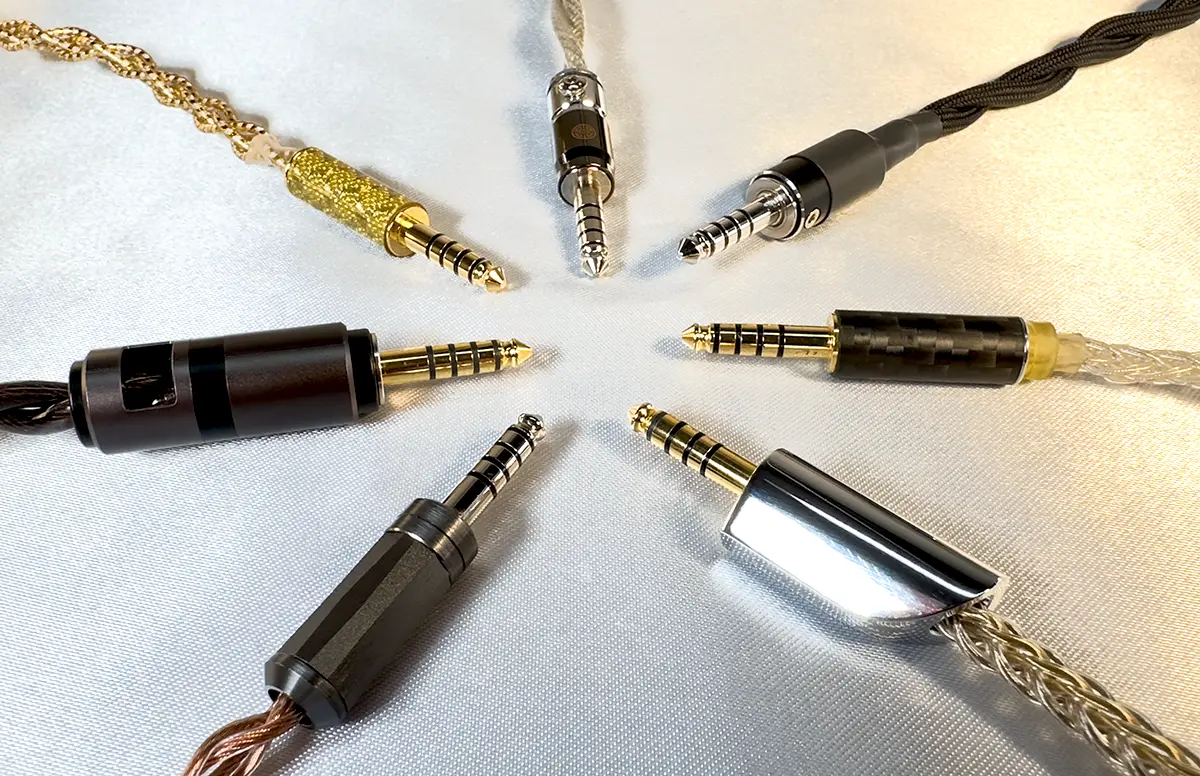
How much should I spend?
It’s a question often asked by hobbyists, and the answer hinges on how you choose to perceive cable value, which is itself dependant on the value you place on better sound.
I can’t answer that for you, but perhaps sharing a few thoughts on price/performance ratios in the industry may help.
These days the entry level side of the market is monstrously competitive and new cables are being released often. It’s remarkable to think cables as impressive as NiceHCK’s BlackSoul can be had for $50 or Penon’s Vocal for under $70.
In fact for most people I’d advise keeping your cable purchases under $100 and building a small collection, or demoing as many cables as you can to get a feel for what’s out there.
Until you’ve amassed experience with a wide assortment of material types (copper, silver etc.) spending more on a single cable may be risky.
Once you have a good idea of the type of cable likely to pair well with your IEMs then spending more on a heavier 8 wire version may be worthwhile, but only if you’re willing to stomach the ergonomic penalty. You probably will notice the performance gains.
A Spending Ratio
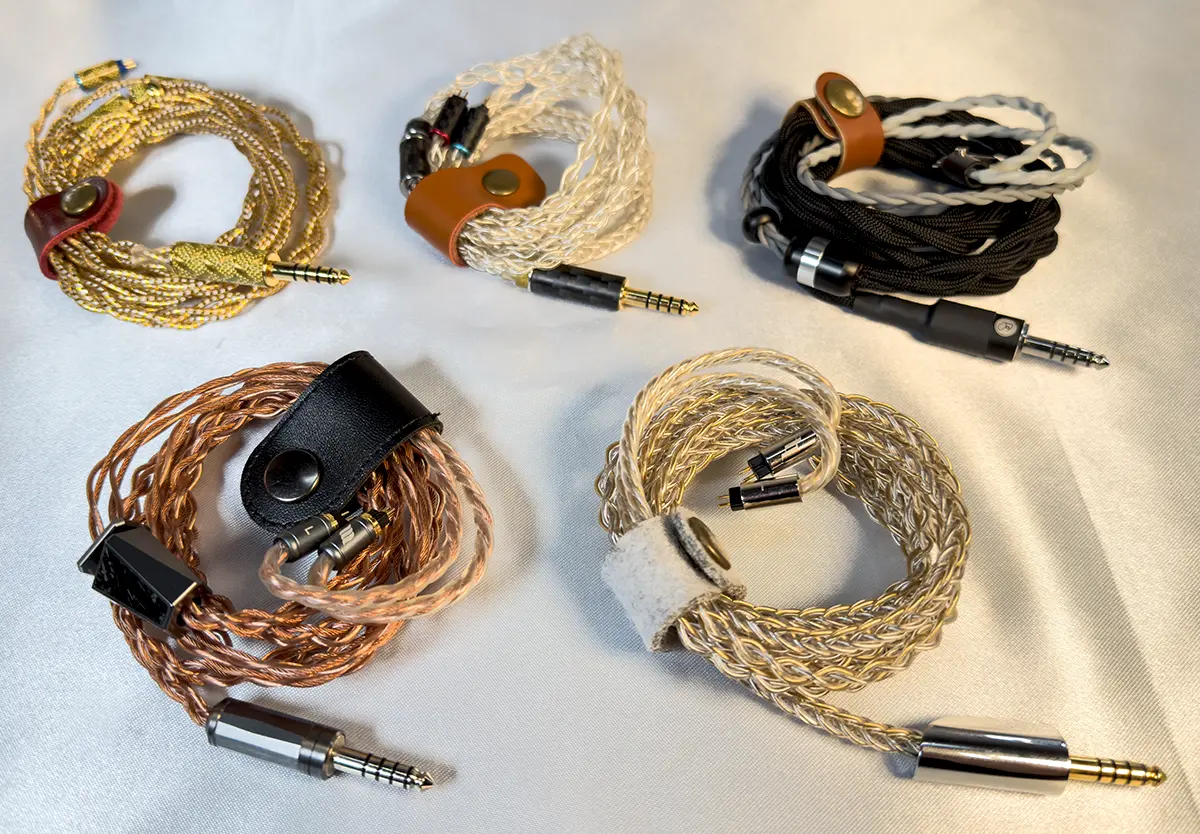
Many hobbyists like to develop a ratio for how much they’re comfortable spending based on the price of their earphones – perhaps limiting a cable purchase to 20% of the value they paid for their IEMs. There’s a great deal of logic in that.
However my shootout findings have led me to believe spending more isn’t necessarily a bad thing. For example, retailing for $499 the Penon 10th Anniversary may be cheaper than you’d need to pay someone to build a Cardas Clear cable – yet I’ve found 10th Anniversary performance improved by Cardas Clear to such an extent the additional cost felt reasonable.
Could you obtain higher overall performance by spending the total amount of both cable & IEM entirely on a more expensive pair of earphones in the first place, particularly if purchased on the used market? Perhaps, but if you already own a pair of IEMs you love & want to improve that can be a moot point.
I do feel the quality of drivers used even in entry-level hybrid IEMs these days is remarkably good, to say nothing of mid-priced earphones like the EST50 & 10th Anniversary which absolutely succeeded in revealing the differences between the most expensive cables in the shootout.
So if you do spend more on a cable that extra performance probably won’t be wasted even if your IEM isn’t a flagship worth thousands.
Diminishing Returns

Yes, spending a few hundred on a cable (especially a large 8 wire version) will potentially net you substantially better performance than one under $100.
However voyaging beyond the likes of Cadmus 8 or Martini into Code 23 or Venom territory on a price/performance basis is significantly harder to justify. The benefits are there, but you’re much deeper into diminishing returns by that stage.
Going even further by considering the flagship cables of EA, PW Audio, Eletech or Brise and suddenly you’re spending thousands instead of hundreds. Having demoed such cables I can honestly say the improved sonic benefits are there, but value becomes immensely harder to justify.
If you can afford to breathe such rarefied air, congratulations. If not, a very significant percentage of such performance can be obtained from a relatively affordable cable like Cadmus 8 for instance if you’re willing to deal with questionable ergonomics. Which doesn’t mean a $3000 cable like Chiron 8 won’t sound even better, but absolutely not 1000% better as the price difference may suggest.
Long Term Cable Value
A further point to consider is that cables can retain their usefulness fairly well over time.
Flagship cables from 5 years ago still sound fantastic today, whereas IEMs and especially digital audio players tend to be perceived as obsolete much faster. Largely due to how much slower cable technology evolves by comparison.
This is also why purchasing from an established brand like one of those mentioned earlier may cost you more upfront, but their brand recognition will probably result in your cable being easier to sell on the used market and hold its’ value better.
Having said that, Chinese companies like Hakugei who manufacture wire as an OEM for many western brands sell cables of similar performance for much lower prices. We have yet to see the kind of price competition evident in the budget side of the market among flagship cables, but that may be changing.
Introduction
Cable 1 & 2 – EA Ares S 4 Wire & 8 Wire
Cable 3 – Effect Audio Cadmus 8 Wire
Cable 4 – Effect Audio Code 23
Cable 5 – ISN S8
Cable 6 – Liquid Links Martini
Cable 7 – Liquid Links Venom
Cable 8 – NiceHCK BlackSoul
Cable 9 – Penon CS819
Cable 10 – Penon Leo Plus
Cable 11 – Penon Obsidian
Cable 12 – Penon Vocal
Cable 13 – DIY Cardas Clear
Cable 14 – DIY Hakugei Gray Dragon
Cable 15 – DIY Hakugei Sky-Sea Voice
Talking Point – Cable Performance vs Ergonomics
Talking Point – Cable Value
Talking Point – Cable DIY
Cable Awards
Conclusion
Cable Manufacturer Links & Acknowledgements
Comments